
Social Media Manager
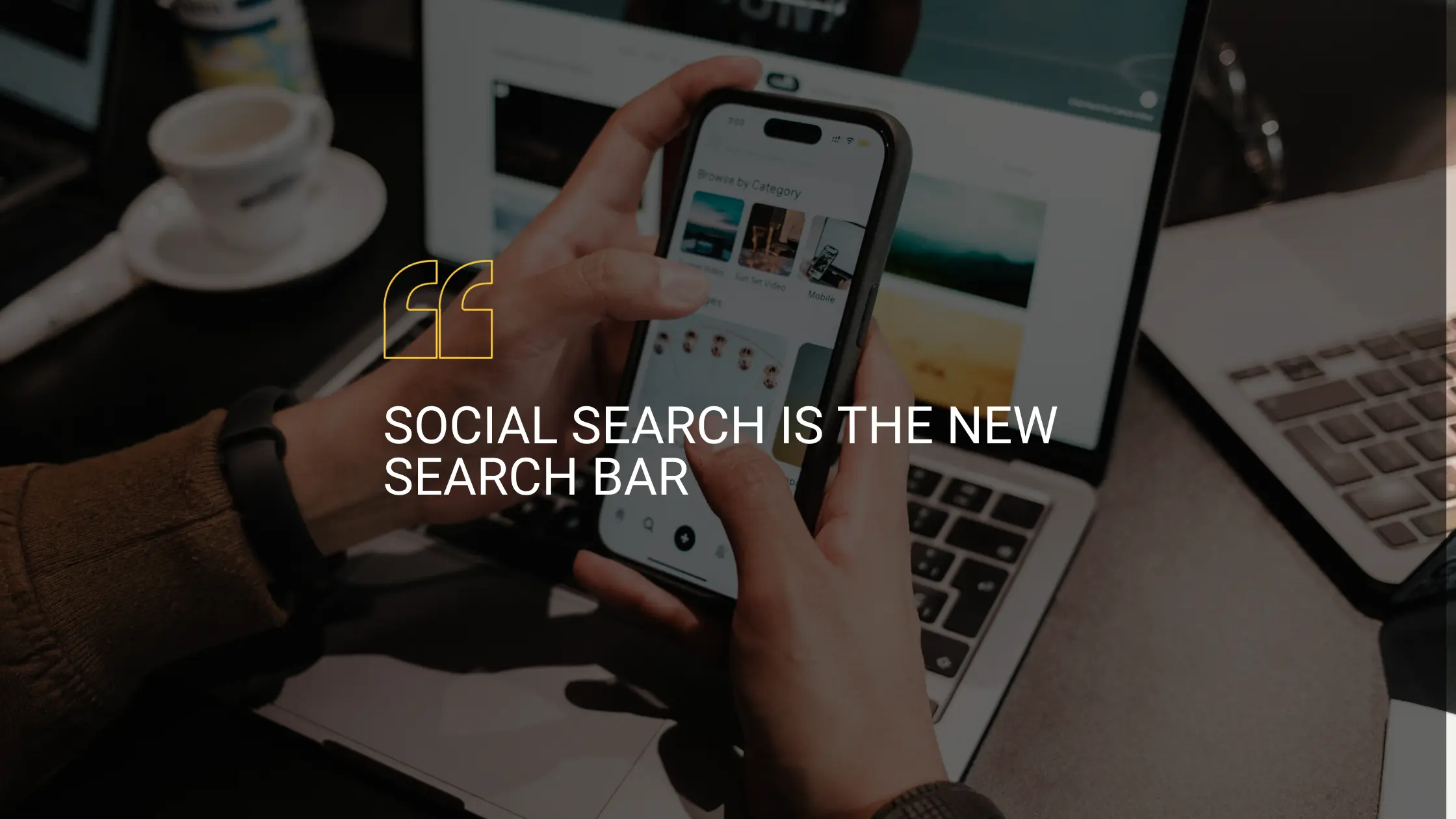
Social Search Is the New Search Bar
A few weeks ago, my mum and I were talking about recipes. She has this cookbook, the kind with recipes written down to the tee, passed along and annotated over years. "Should I send you the recipe from the book?" she asked.
"No, that's okay," I said. "I'll look it up."
I opened Instagram, watched a reel for about 30 seconds, and that was that. Ingredients, method, a visual of exactly what the finished dish should look like. Done.
It's a small moment, but it says a lot about how we find information now. Not long ago, planning a trip meant hours of reading articles and blogs: the best things to do, the hidden gems, the hacks nobody tells you about. Now it's a 30-second scroll to get the gist, delivered by someone who's already done the research and packaged it into something quick, visual, and easy to trust.
This shift has a name, and it matters more for brands than most realise.
Organic Social Is Becoming a Search Strategy
Search hasn't disappeared. It's moved. People are typing their questions into Instagram, TikTok, and YouTube search bars just as often as Google's, and platforms have adapted their algorithms to reward exactly that behaviour.
Brands that structure their content around the questions their audience is already asking will be far more discoverable than those simply posting for engagement. That's the mindset shift: less "what will get likes today" and more "what is someone searching for right now, and can we be the answer."
Why This Matters
According to a Sprout Social’s Survey in Q2 of 2025, 41% of Gen Z have a social-first search mindset, and 37% of consumers in general use social media as their starting point for product research. That behaviour has seen to have a real business impact with 76% of all consumers, rising to 84% of Millennials and 90% of Gen Z, saying they’ve bought something in the last six months because of content they saw on social.
As social platforms increasingly function as search engines, brands that fail to create discoverable content risk becoming invisible to the audiences actively looking for their products, services, and expertise. Organic social is no longer just about posting consistently; it's about being found at the right moment.
Think about my mum's cookbook again. It held good information, but it wasn't discoverable in the moment I needed it. The reel was. That's the gap brands need to close: having the right answer isn't enough if it isn't structured to surface when someone's actively looking.
How Brands Should Adapt
Success now depends on combining audience insight, content strategy, and platform expertise to create content that not only engages but consistently gets discovered.
That means:
Starting with the real questions your audience is asking, not just the topics you feel like posting about
Structuring content (hooks, captions, on-screen text) the way you'd structure an SEO-friendly headline
Treating each platform's search behaviour differently, since what surfaces on TikTok isn't the same as what surfaces on Instagram or YouTube
For businesses, now is the time to rethink how content is planned, structured, and optimised. The brands that adapt early will be the ones that capture attention, and demand, where it matters most.
The next time someone has a question about your industry, your product, or your service, the goal is simple: make sure your content is the 30-second answer they land on, not the cookbook they never open.