
Founder CEO PinPoint Media
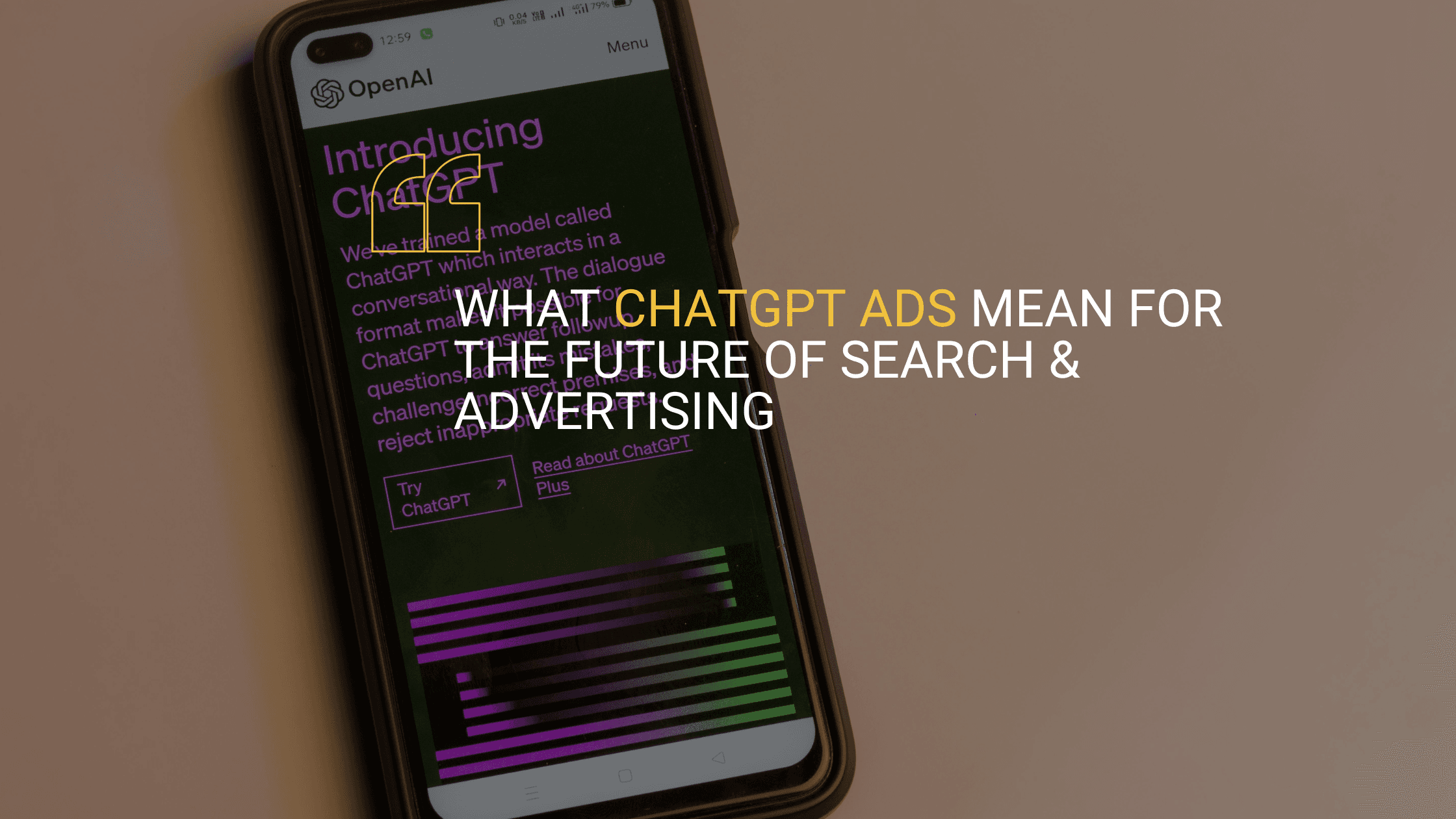
ChatGPT is no longer just a chatbot. It’s becoming a hub for discovery, decision-making and now, advertising and is truly changing the information-search landscape. OpenAI has announced it will start testing ads in the US, and while details are limited, the implications are huge for both marketers and brands. This isn’t about adding banners or pop-ups, it’s about reaching people at an earlier stage of their journey, in a place they trust for answers.
This has great potential and it’s worth paying attention to now. The way ads integrate with ChatGPT could reshape how we think about intent, targeting and even the timing of campaigns. In this blog, I’ll break down what we know, what’s likely to happen, and what advertisers should be preparing for before these ads reach the UK.
ChatGPT Ads, Why This Was Always Coming
Running a tool like ChatGPT at scale is expensive. The model consumes huge amounts of computational power every time someone asks a question, and the infrastructure to support millions of daily users is not cheap. Subscriptions alone can’t cover that cost, and relying purely on paid tiers limits growth. Ads are the natural next step as they have an unlimited revenue-potential that can help foster the aggressive growth that OpenAI likely has planned.
But this won’t be the same as typical online ads. OpenAI isn’t going to plaster banners everywhere or add intrusive pop-ups. The ads will need to blend into the experience, appearing where they feel useful rather than disruptive. That distinction is crucial. If done right, users won’t feel sold to, they’ll feel helped. That’s why ads here are inevitable but also tricky.
What OpenAI Has Confirmed
OpenAI has been deliberately careful in its messaging. Here’s what we know: ads are being tested in the US, only on free accounts, and they will be clearly labelled. Paid subscriptions remain ad-free. OpenAI has also emphasised that ads will not affect the model’s answers, so the core user experience should remain intact.
What hasn’t been confirmed is equally interesting. There’s no word on targeting beyond basic demographic assumptions, no pricing models, and no exact ad formats beyond the vague “ads” and “suggested options.” That suggests OpenAI is still testing user behaviour before committing to anything permanent. How people respond will shape the ad formats and policies more than anything else.
As of the time of writing this, the news has only just been confirmed and there is likely more information to be released over the next few weeks with more details on things like targeting and pricing.
Why the US Is the First Testing Ground?
There’s a lot of reasons to test in the US first. It’s already a huge market with various clusters of different types of users, all of whom are already familiar with and accept the use of digital ads. It also gives OpenAI a faster feedback loop on revenue potential, user tolerance, and ad performance. If US users react poorly, that’s a manageable problem compared to rolling out globally.
Think of it like a test kitchen. You put your new recipe in a market that’s big enough to tell you if it works, but familiar enough that you can iterate quickly. If the test succeeds, everything else is just logistics.
The biggest likely reason though is that OpenAI was created and developed in San Francisco,California, so the developers and creators are testing in a market that is already known to them, where they are also part of that user base.
How Ads Are Likely to Appear Inside ChatGPT
These ads won’t look like Google search ads dropped into a chat window. That would break the experience immediately. ChatGPT works because it feels helpful and neutral, so anything commercial has to sit quietly alongside that.
The most realistic outcome is that ads show up as part of the answer, not bolted on around it. If someone asks a question where a product or service genuinely makes sense, ChatGPT can surface an option and be upfront that it’s sponsored. That transparency is important, but so is tone.
In practice, it’ll probably look something like this:
Sponsored suggestions: One option in a list of recommendations, clearly labelled as sponsored. Not top of the page, not shouting for attention. Just there, in context. If someone asks about CRM tools, seeing one paid option among others doesn’t feel jarring if it genuinely fits the brief.
Simple recommendation cards: A short block with a product name, a line or two explaining why it’s relevant, maybe a small logo, and a link. Nothing flashy. More “helpful nudge” than “ad creative”.
Very selective triggering: These ads won’t show up everywhere. They’ll likely only appear where OpenAI is confident the question has commercial intent. A general “how does X work” prompt probably stays ad free.
If ads start appearing too often or in the wrong moments, users will notice straight away. OpenAI knows that. Which is why restraint will be part of the design.
What OpenAI Will Be Testing For
This is where it gets interesting. Clicks matter, but they will likely not be the main measure of success. OpenAI will be watching engagement and trust more than anything. Do users continue to interact with the model after seeing an ad? Do sessions shorten or drop off? Does trust in the model decrease? The answers to these questions and the effect on engagement will determine whether expanding outside the US becomes a realistic next step. And that’s when the advertising landscape will start to shift.
They should balance monetisation with user experience. If ads reduce engagement or erode trust, the product loses value faster than any revenue they might earn. This makes the test more nuanced than a typical click-through rate experiment.
Why Intent in ChatGPT Is Different From Google Search
On Google, users often arrive with a clear goal. They know what they’re looking for, even if it’s just “best digital marketing agencies UK”. Ads work because they match that expressed intent. ChatGPT is different. Whilst it is similar to intent-based searches like Google, people come with more curiosity, questions and the need to explore. It’s also a lot more conversational than traditional search methods.
For advertisers, that changes the game. Success isn’t just about appearing for the right search term, it’s about being genuinely useful in the flow of the conversation. Your messaging needs to answer the question in context, offer something helpful, and build trust in real time. It’s less transactional and more about being a reliable part of the user’s discovery process. The brands that get this right will feel like part of the answer, not just a clickable link.
How This Could Reshape Paid Search and Discovery
If ChatGPT ads work, they won’t immediately replace Google or Bing ads. But they could change the way brands approach discovery. Instead of targeting explicit searches, brands will compete for attention inside conversations. Context, relevance and usefulness matter far more than keyword match.
It also opens doors for early experimentation. Brands willing to engage with this new type of intent can capture users before they even hit a search engine. That could make ChatGPT a powerful complement to traditional search and social campaigns.
What Advertisers Will Actually Need to Provide
You won’t be writing ads to win an auction. You’ll be writing ads to fit into a conversation without killing it. That’s a very different skill.
At a minimum, advertisers will need:
Plain, conversational copy: Not ad copy in the traditional sense. More like a calm explanation of what you do and who it’s for. If it sounds like a Google RSA headline, it’s probably wrong.
A clear use case: Why should your answer show up for that question? If that isn’t obvious in a sentence or two, it won’t work. ChatGPT ads will punish vague positioning very quickly.
Light branding: A logo or small visual helps anchor trust, but anything heavy or salesy will feel out of place. This isn’t social.
A landing page that finishes the job: If someone clicks, they expect continuity. Same language, same promise, no friction. A generic homepage or slow-loading page will kill performance instantly.
The big shift is mindset. These ads aren’t about grabbing attention. They’re about earning it quietly. Brands that treat this like another performance channel will likely struggle. Brands that treat it like assisted decision-making will do much better.
When the UK Is Likely to See Testing
OpenAI hasn’t given a date. But history provides some clues. Successful US tests usually lead to expansion into English-speaking markets within a few months, assuming no regulatory blockers. Privacy and advertising rules in the UK and EU may slow things down slightly, but nothing seems insurmountable. A reasonable estimate is late 2026 if the US testing proves successful.
UK advertisers will need to be ready. The brands that move early and adapt to this conversational model will have a clear edge when the ads finally arrive.
What Advertisers Should Be Paying Attention To Now
Forget budgets for the moment. What matters is understanding how users interact with ChatGPT in your category. What questions are they asking? How do they phrase them? At what stage of decision-making are they?
When ads land in the UK, the brands that succeed won’t be the ones spending the most. They will be the ones that feel genuinely helpful inside the conversation. That’s a different mindset from traditional search or social campaigns, and the sooner advertisers start thinking this way, the better.